


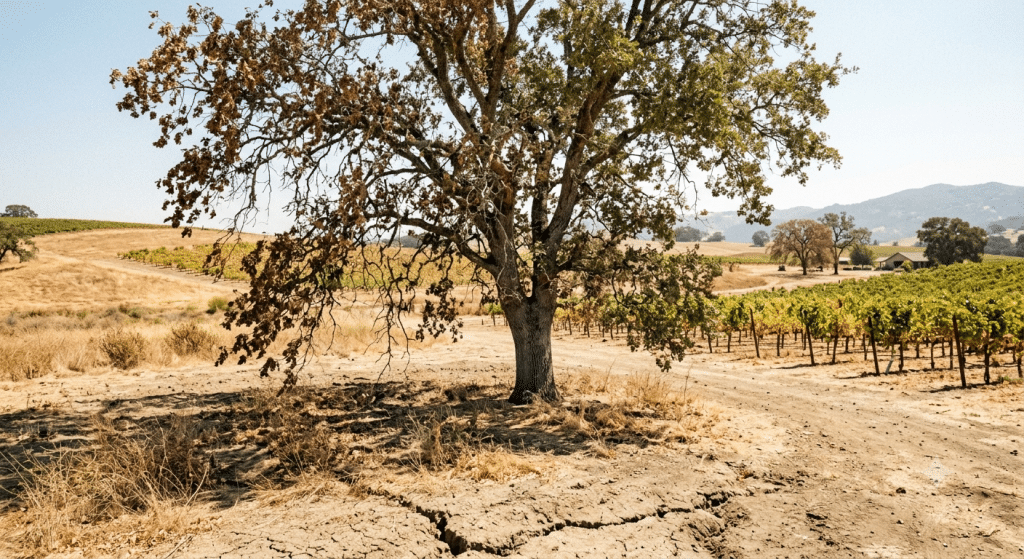
Northern California summers can be hard on trees. Extended periods of high temperatures, dry soil, and low rainfall create stressful conditions that can impact tree health long after a heat wave passes.
While mature trees may appear strong and self-sufficient, extreme heat can place significant stress on root systems, foliage, and overall vigor. Young trees, recently planted trees, and trees already dealing with drought stress are particularly vulnerable.
The good news is that proactive care can help your trees better withstand summer heat and remain healthy throughout the season.
Why Extreme Heat Is Hard on Trees
Trees rely on water to regulate temperature, move nutrients, and support healthy growth. During periods of extreme heat, water loss through leaves increases significantly.
When soil moisture becomes limited, trees begin conserving resources. This often leads to visible stress symptoms and, in severe cases, long-term decline.
Heat stress can contribute to:
- Premature leaf drop
- Leaf scorch and browning
- Reduced growth
- Increased susceptibility to pests and disease
- Branch dieback
- Long-term root damage
Trees that have already experienced drought conditions in previous years may be especially vulnerable during hot weather.
Water Deeply, Not Frequently
One of the most effective ways to protect trees during extreme heat is proper watering.
Many homeowners make the mistake of applying small amounts of water frequently. This encourages shallow roots, which are more vulnerable to drying out during hot weather.
Instead, focus on deep watering that reaches the root zone.
Best Practices for Deep Watering
- Water slowly to allow moisture to soak into the soil.
- Focus on the area beneath the canopy, where most absorbing roots are located.
- Water early in the morning when evaporation is lowest.
- Allow the soil to dry slightly between watering cycles.
- Adjust watering frequency based on tree age, soil type, and temperature.
Young trees generally require more frequent watering than established trees because their root systems are still developing.
Improve Soil Moisture Retention
Healthy soil plays a major role in helping trees withstand heat.
When soil dries out quickly, roots have less access to the moisture they need. Improving moisture retention can reduce stress and help trees remain healthier during prolonged hot weather.
Apply Mulch Around Trees
A layer of organic mulch can help:
- Reduce soil temperature
- Slow moisture evaporation
- Improve soil structure
- Support beneficial microorganisms
Apply 2 to 4 inches of mulch around the tree’s root zone while keeping it several inches away from the trunk.
Avoid piling mulch directly against the bark, which can lead to decay and pest problems.
Watch for Signs of Heat Stress
Trees often provide early warning signs when they are struggling with high temperatures.
Knowing what to look for can help you address problems before significant damage occurs.
Common Symptoms of Heat Stress
Leaf Scorch
Leaves may develop brown or crispy edges, particularly on exposed portions of the canopy.
Wilting or Drooping Foliage
Leaves may appear limp even when they remain green.
Premature Leaf Drop
Trees sometimes shed leaves early to conserve moisture and reduce stress.
Thinning Canopy
A sparse canopy can indicate a tree is struggling to support normal growth.
Dead Twigs or Branches
Heat stress can lead to dieback in portions of the canopy, especially in already weakened trees.
If these symptoms continue after temperatures moderate, a professional tree health evaluation may be beneficial.
Reduce Additional Stress on Trees
During periods of extreme heat, it is important to minimize activities that place additional stress on trees.
Avoid Excessive Pruning
Pruning removes foliage that helps shade branches and regulate temperature.
Unless there is an immediate safety concern, major pruning work is often best scheduled outside of extreme heat periods.
Protect Root Zones
Compacted soil limits water infiltration and oxygen availability.
Avoid:
- Parking vehicles near trees
- Heavy equipment traffic over root zones
- Excessive foot traffic around sensitive root systems
Healthy roots are critical for helping trees recover from heat stress.
Consider Professional Tree Health Treatments
Trees experiencing ongoing stress may benefit from supplemental care designed to improve soil conditions and root health.
Professional arborists may recommend services such as:
- Deep root fertilization
- Biohydration treatments
- Soil conditioning
- Tree health assessments
- Root zone management
These treatments can help improve nutrient availability, soil moisture retention, and overall tree resilience during challenging weather conditions.
Which Trees Are Most Vulnerable?
Certain trees are more susceptible to heat stress than others.
Higher-risk trees often include:
- Newly planted trees
- Young trees with developing root systems
- Trees growing in compacted soils
- Trees affected by previous drought conditions
- Trees already experiencing pest or disease issues
Regular inspections can help identify vulnerabilities before they become serious problems.
Protect Your Trees Before the Next Heat Wave
Extreme heat is becoming an increasingly common challenge for property owners throughout Sonoma County and Northern California.
The best defense is proactive care. Deep watering, proper soil management, and early detection of stress can help your trees remain healthy, attractive, and resilient throughout the hottest months of the year.
If you’re noticing signs of heat stress or want guidance on the best care plan for your trees, a professional arborist evaluation can help identify issues early and recommend solutions tailored to your property.
Frequently Asked Questions
How often should I water trees during extreme heat?
The answer depends on tree size, age, soil type, and weather conditions. In general, deep watering less frequently is more beneficial than shallow daily watering.
Can heat stress permanently damage a tree?
Yes. Severe or prolonged heat stress can weaken trees, contribute to branch dieback, and increase vulnerability to pests and diseases.
Is mulch helpful during heat waves?
Yes. Organic mulch helps regulate soil temperature and retain moisture, making it one of the most effective ways to reduce heat-related stress.
What does heat stress look like in trees?
Common symptoms include browning leaf edges, wilting foliage, premature leaf drop, thinning canopies, and branch dieback.
Should I fertilize trees during extreme heat?
Not always. Trees under significant stress should be evaluated before fertilization. A professional arborist can determine the most appropriate treatment based on tree condition and soil health.
Protect Your Trees This Summer
Extreme heat can take a toll on even healthy trees, but proactive care can make a significant difference.
Image Tree Pros provides expert tree health evaluations, deep root fertilization, biohydration services, and customized tree care solutions for residential, commercial, and municipal properties throughout Sonoma County and Northern California.
Schedule a professional tree health assessment today by contacting us online and help your trees stay healthy through the hottest part of the season.