

Sometimes signs that a tree is doing poorly are obvious. Its leaves turn black, curl up and fall, or its bark weeps sap or sloughs off. Dead-looking branches suddenly snap off and fall even though there’s no wind. Other signs of disease are more subtle. If you see signs of disease in your tree, get in touch with a professional arborist for a diagnosis and treatment.
Dutch Elm Disease
Dutch elm disease is caused by a fungus that beetles spread. It famously destroyed millions of elm trees in the 20th century and is still a problem. It causes the leaves of elms to turn yellow and wilt even in summer. This starts at the top of the tree and spreads down until all the branches are affected. Unfortunately, the condition is terminal, but your arborist can treat your tree to extend its life for a few years.
Mushrooms at the Roots
Mushrooms growing at the root of a tree might be harmless, but they can also be a sign of a problem. Sometimes the mushrooms behave symbiotically with the tree by breaking down old, dead roots or fallen leaves. However, if the mushrooms are sprouting directly from the tree’s roots or bark, it may mean that the tree is sick. Have an arborist check it.
Powdery Mildew
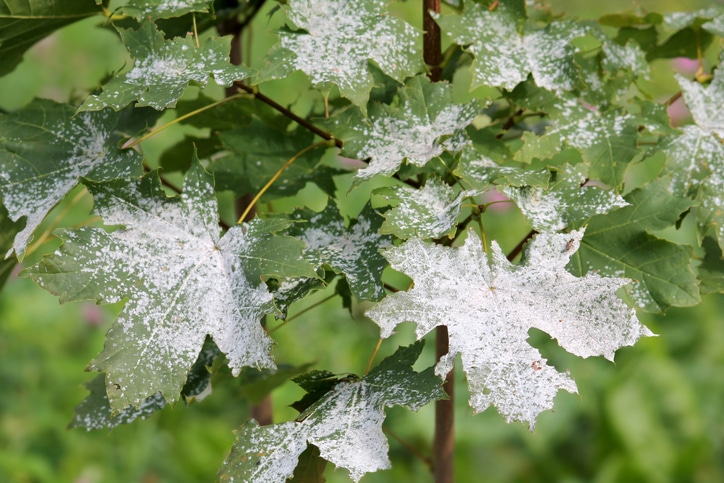
Gardeners know that powdery mildew affects their herbaceous plants, but it also attacks trees. Its signs are powdery lesions on the tree’s leaves and flowers. Eventually, the lesions turn brown and dry out. Fortunately, some tree species have been bred to resist powdery mildew, and the disease can be treated with a fungicide.
Needle Blight
This tree disease attacks pines. It makes older trees lose their needles and stunts saplings. An effective way to treat needle blight is for a professional to apply a copper-based fungicide just when the tree is starting to bud.
Oak Wilt
The bad news is that, like Dutch elm disease, oak wilt is a terminal fungal disease. The good news is that though it kills red oaks, it can be treated when it strikes other species. You’ll see leaves discoloring, wilting, and finally falling. You’ll also see streaks of green, rust, or black on the bark. This is called vascular discoloration, and it means the tree is struggling to sequester the infection. Some oaks may be treated to slow the spread, depending on the species and severity.
Spots on the Leaves
A variety of diseases can cause spots on the leaves of many species of tree. Again, the problem is several types of fungi. The spots are often brown or yellow or even black, which gives them the name of “tar spot.” Fortunately, these diseases usually won’t kill or even badly weaken an otherwise healthy tree, but they’re unsightly.
Staying alert to early signs of disease can make a big difference in protecting the health of your trees. If something doesn’t look right, bringing in a professional arborist can help you catch problems early and avoid more serious damage. If you have concerns or require disease management services, contact Image Tree Pros in Sonoma County, CA.